Saturday, June 23, 2012
COGNITIVE PSYCHOLOGY FOR DAILY LIFE: Metacognition for better learning
COGNITIVE PSYCHOLOGY FOR DAILY LIFE: Metacognition for better learning: Thinking about thinking Metacognition is cognition about cognition or thinking about thinking. It is a kind of self-auditing or self-...

Thursday, June 21, 2012
COGNITIVE PSYCHOLOGY FOR DAILY LIFE: Information processing by human mind
COGNITIVE PSYCHOLOGY FOR DAILY LIFE: Information processing by human mind: Human mind works by the process of computation. Computation is a process following a well-de...
Tuesday, June 19, 2012
COGNITIVE PSYCHOLOGY FOR DAILY LIFE: Disorder of attention
COGNITIVE PSYCHOLOGY FOR DAILY LIFE: Disorder of attention: The only disorder of attention is attention deficit. Persons suffering from from generalised anxiety disorder often complain that they c...
Saturday, May 26, 2012
Monday, May 21, 2012
Curse of knowledge and other cognitive biases that lead to wrong decision making
A person may be consciously biased towards or against an
ideology, a political party, a religion, a creed, a caste, a country, an ethnic
group etc. But a cognitive bias is different from such conscious partisanship.
Cognitive bias is an unconscious psychological process which guides the
individual in decision making without the individual’s conscious awareness. It
is the result of perceptual distortion, inaccurate judgment, or illogical
interpretation of facts. A conglomeration of these is called irrationality.
Cognitive biases are the result of distortions in the human
mind that always lead to the same pattern of poor judgment, often triggered by
a particular situation. But how can one person decide the judgment of another
person poor? In order to decide the judgment to be poor there should a standard
of “good judgment”. In scientific
investigations of cognitive bias, the source of “good judgment” is that of
people outside the situation which is presumed to cause the poor judgment or a
set of independently verifiable facts.
Positive side of cognitive biases
According to the evolutionary psychology some cognitive
biases are adaptive and beneficial because they lead to more effective actions
in given contexts or enable faster decisions when faster decisions are of
greater value for survival or reproduction.
Some common cognitive biases
Anchoring
This common cognitive bias is also called focalism. It
refers to a common human tendency to rely too heavily, or “anchor” on one piece
of information when making decisions. During normal decision making anchoring
occurs when individuals overly rely on a specific piece of information to
govern their thought-process. Once the anchor is set, there is a bias toward
adjusting or interpreting other information to reflect the “anchored”
information. Through this cognitive bias, the first information about a subject
can affect future decision making and analysis of new information. For example
when a person looks to buy a used car he/she may focus attention excessively on
the distance travelled by it as indicated by the odometer rather than
considering how well the engine or the transmission is maintained.
Focusing effect
 |
| Daniel Kahneman |
It is also called focusing illusion. This cognitive bias
occurs when people place too much importance to an event, causing an error in
accurately predicting the utility of future outcome. In economics utility means a measure of
satisfaction. People focus on notable differences, excluding those that are
less conspicuous, when making predictions about happiness or convenience. For
example, a rise in income has only a small and transient effect on happiness
and well-being, but people consistently overestimate this effect. Nobel laureate
Israeli-American psychologist Daniel Kahneman and associates proposed that this
is as a result of a focusing illusion, with which people focusing on
conventional measured of achievement rather than on everyday routine. Kahneman
writes: “Surveys in many countries conducted over decades indicate that, on
average, reported global judgments of life satisfaction or happiness have not
changed much over the last four decades, in spite of large increase in real
income per capita. While reported life satisfaction and household income are
positively correlated in a cross-section of people at a given time, increase in
income has found to have mainly transitory effect on individuals’ reported life
satisfaction.” (Would You Be Happier If You Were Richer? By Daniel Kahneman
et. al. CEPS Working Paper No. 125 May 2006)
Confirmation Bias
The confirmation bias refers to the tendency to selectively
search for and consider information that confirms one's beliefs.
Examples: A student who is going
to write a research paper may primarily search for information that would
confirm his or her beliefs. The student may fail to search for or fully
consider information that is inconsistent with his or her beliefs.
A reporter who is writing an article on an
important issue may only interview experts that support her or his views on the
issue.
An employer who believes that a job applicant is
highly intelligent may pay attention to only information that is consistent
with the belief that the job applicant is highly intelligent.
Curse of knowledge
 |
| Robin Hogarth |
The curse of knowledge is a cognitive bias according to
which better-informed individuals may have the disadvantage that they lose some
ability to understand properly the lesser-informed individuals. As such added
information may convey some disutility. The term “curse of knowledge” was
coined by the film and TV music composer Robin Hogarth. In one experiment, one
group of participants "tapped" a well-known song on a table while
another group listened and tried to identify the song. Some "tappers"
described a rich sensory experience in their heads as they tapped out the
melody. Tappers on average estimated that 50% of listeners would identify the
specific tune; in reality only 2.5% were able to. This means that the better
informed individuals failed to understand properly the lesser informed
individuals. It has been argued that the
curse of knowledge could contribute to the difficulty of teaching.
Conservatism
It is a cognitive bias. In 1973 British psychologist Glenn
Wilson published an influential book providing evidence that a general factor underlying
conservative beliefs is “fear of uncertainty.” An analysis of research papers
in 2003 established that not only fear of uncertainty but many other
psychological factors like intolerance of ambiguity and need for “cognitive closure”
contribute to the degree of one’s political conservatism. The term cognitive
closure has been defined as “a desire for definite knowledge on some issue and
eschewal of confusion and ambiguity.” (European Review of Social Psychology No.
18 pps. 133-173)
Availability bias
Availability bias is a cognitive bias that causes many to
overestimate probabilities of events associated with memorable or dramatic
occurrences. More than a bias, it is a “cognitive illusion.” Since, memorable
events are further magnified by coverage in the media; the bias is compounded
on the society level. Two well-known examples would be estimations of the
probability of plane accidents and the kidnap of children. Both events are
quite rare, but the huge majority of the population outrageously overestimates
their probability, and behaves accordingly. In reality, one is more likely to
die from an automobile accident than from a plane accident, and a child has a
higher risk of dying in an accident than the risk of getting kidnapped. Availability bias is at the root of many other human biases.
Wednesday, May 16, 2012
Prodigies and idiot savants: Wonders of human intelligence
 |
| Sergei Karjakin -The youngest Grand Master |
Comedy
screen writer Andrew Marshall wrote in TIME magazine: “When he was nearly three
years old, Nguyen Ngoc Truong Son would watch his mother and father playing
chess in the family's ramshackle home in the Mekong Delta, and, like any
toddler, pester them to let him play, too. Eventually they relented, assuming
the pieces would soon wind up strewn around the kitchen, a plastic bishop
stuffed into a teapot. To his parents' astonishment, Son did not treat the
chess set as a plaything. He not only knew how to set up the board, which was
crudely fashioned with a piece of plywood and a felt-tipped pen. He had, by
careful observation, learned many of the complex rules of the game. Within a
month, he was defeating his parents with ease. By age 4, Son was competing in
national tournaments against kids many years older. By age 7, he was winning
them. Now 12, he is Vietnam's youngest champion and a grand master in the
making.” ("Small Wonders": TIME Monday, Feb. 17, 2003)
Nguyen Ngoc
Truong Son is, no doubt a child prodigy. In the game of chess the youngest grandmaster
is Sergei Karjakin of Ukraine. The standard definition of a prodigy
is a child who by age 10 displays a mastery of a field usually undertaken only
by adults. Prodigies are, by this definition, extraordinary ones whose standout
accomplishments are obvious. Ellen Winner, a psychologist in Boston and author
of Gifted Children: Myths and Realities says: "I always
say to parents, 'If you have to ask whether your child is a prodigy, then your
child isn't one.'"
Brains of
prodigies
American
psychologist Michael O'Boyle in Melbourne has been scanning the brains of young
people gifted in mathematics. O'Boyle found that, compared with average kids,
children with an aptitude for numbers show six to seven times more metabolic
activity in the right side of their brains, an area known to mediate pattern
recognition and spatial awareness—key abilities for mathematics and music.
Scans also showed heightened activity in the frontal lobes, believed to play a
crucial "executive" role in coordinating thought and improving
concentration. This region of the brain is virtually inactive in average
children when doing the same tasks.
O'Boyle
believes prodigies also can switch very efficiently between the brain's left
and right hemispheres, utilizing other mental resources and perhaps even
shutting down areas that produce random distractions. In short, while their
brains aren't physically different from ordinary children's, prodigies seem to
be able to focus better—to muster the mental resources necessary to solve
problems and learn. O'Boyle says: "For the longest time, these kids'
brains were considered the same as everyone else's; they just did twice as
much, twice as fast. It turns out those quantitative explanations don't fit.
They're doing something qualitatively different."
Neuro-cognitive
basis
What is the
neuro-cognitive basis of this extraordinary brilliance? Are prodigies born
different, gifted by genetic accident to be mentally more efficient? Or is the
management of mental resources something that can be developed? Scientists
aren't sure. Studies have shown that raw intelligence, as measured through IQ
tests, is highly (though not completely) inheritable. But the connection
between high intelligence and prodigious behavior is far from absolute.
So-called idiot savants, for example, show unusual mastery of specific
skills—they could even be described as prodigies were it not for their overall
low intelligence. And many very creative children don't necessarily register
high IQs because they don't test well on standardized intelligence tests and
examinations, says McCann, the education specialist at Flinders University.
Creative kids "are looking for different ways to answer the
questions," she says. "They're looking for the trick questions."
Unlimited
storage capacity of memory
 |
| Mauro Pesenti |
In a
pioneering study in this issue, neuroscientist Mauro Pesenti and colleagues
have now used functional brain imaging to examine the calculating prodigy
Rüdiger Gamm, and to compare his brain activity with that of normal control
subjects as they perform mental arithmetical calculations. Gamm is remarkable
in that he is able to calculate 9th powers and 5th
roots with great accuracy and he can find the quotient of 2 primes to 60 decimal
places. The authors found that Gamm’s calculation processes recruited a system
of brain areas implicated in episodic memory, including right medial frontal
and parahippocampal gyri, whereas those of control subjects did not. They suggest
that experts develop a way of exploiting the unlimited storage capacity of
long-term memory to maintain task relevant information, such as the sequence of
steps and intermediate results needed for complex calculation, whereas the rest
of us rely on the very limited span of working memory.
No more
idiot-savants
 |
| Human Calculator: Rüdiger Gamm |
Savant
syndrome was first recognized by Dr. J. Langdon Down. He also originated the
term Down’s syndrome. In 1887, he coined the term "idiot savant" to
describe someone who had "extraordinary memory but with a great defect in
reasoning power." Idiot is a person with low intelligence. Savant is
derived from the French, savoir, meaning wise. The term idiot-savant is now
little used because of its inappropriate connotations, and the term savant
syndrome has now been more or less adopted. Another term, autistic savant, is
also widely used, but this can be somewhat misleading. Although there is a
strong association with autism, it is certainly not the case that all savants
are autistic. It is estimated that about 50% of the cases of savant syndrome
are from the autistic population, and the other 50% from the population of
developmental disabilities and CNS injuries.
Savant
talents usually appear spontaneously, without warning. The first encounter with
a savant is often very charged. Perhaps because the gift is so extraordinary
and so at odds with assumptions about the disability itself, it can sometimes
seem as if the talent is being revealed, for the very first time, to a viewer's
eyes.
Although
savants often take an immediate interest in their instrument or special skill,
their fully-formed talents do not necessarily blossom overnight, contrary to
the Hollywood notion of a savant. Musical progress is often non-linear. Some
aspects of the talent may emerge before others (such as memory or technical
ability); although, when the skills come together, there is a quantum leap in
overall ability. Once that happens, savant talents can progress quite rapidly.
Nadia’s
drawings
 |
| One of Nadia’s drawings |
“Nadia” was
an autistic savant artist who, by her sixth year, demonstrated an astonishing
ability to draw in what was described as ‘Renaissance-style’ perspective. Nadia
was the subject of a widely-quoted 1977 book by British psychologist Lorna
Selfe. As Nadia gained communicative speech later in childhood, she apparently
lost her artistic talent. Selfe suggested a trade-off between language and
artistic skills: that as language skills were refined, special artistic skills
waned or disappeared.
In fact,
Nadia's loss of interest in drawing came in a shift in her care environment,
and mostly in the wake of her mother's death. It is possible that Nadia simply
lost her main source of encouragement, and that her artistic gift withered for
a lack of praise and reinforcement. Fortunately, such trade-offs are rare.
Savant skills are a very useful ‘conduit toward normalization’ in and of
themselves, and when they exist, can be helpful in developing many other skills
that allow the savant to communicate with the larger world.
A new
explanation

The Indian
born American neuroscientist V. S. Ramachandran writes: “Consider the
possibility that savants suffer brain damage before or shortly after birth. Is
it possible that their brains undergo some form of remapping as seen in phantom
limb patients? Does prenatal or neonatal injury lead to unusual rewiring? In
savants, one part of the brain may for some obscure reasons receive a greater
than average input or some other equivalent impetus to become denser and
larger—a huge angular gyrus, for example. What would be the consequence of
mathematical ability? Would this produce a child who can generate eight-digit
prime numbers? In truth, we know so little about how neurons perform such abstract
operations that it’s difficult to predict what the effect of such change might
be. An angular gyrus double in size could lead not to a mere doubling of
mathematical ability but to a logarithmic or hundred fold increase. You can imagine
an explosion of talent resulting form this simple but “anomalous” increase in
brain volume. The same argument might hold for drawing, music, language, indeed
any human trait.”
He
continues: “a similar argument can be put forth to explain the occasional emergence
of genius or extraordinary talent in the normal population, or to answer the
especially vexing question of how such abilities cropped up in evolution in the
first place.” (PHANTOMS IN THE BRAIN by Sandra Blakeslee & V. S.
Ramachandran p. 192)
Sunday, May 13, 2012
Human intelligence: one or many?
Intelligence
is most widely studied in humans. Animals and plants also are endowed with
intelligence. Yes, plants do have intelligence. A botanist may vouchsafe that plant
intelligence is the ability of plants to sense the environment and adjust their
morphology, physiology, and phenotype accordingly. “Ability” is the phenomenal
aspect of the intelligence. Artificial intelligence is the
simulation of human intelligence in machines.
What really is intelligence?

The definition of intelligence is controversial. In 1994 the Harvard
psychologist Richard J. Herrnstein and political scientist Charles Murray
published a book The Bell Curve which soon became controversial
and best-selling. The book's title comes from the
bell-shaped normal
distribution of intelligence
quotient (IQ)
scores in a population. The central argument in the book is that
intelligence is influenced by both inherited and environmental factors. The
book also argues that those with high intelligence, the “cognitive elite”, are
becoming separated from those of average and below-average intelligence, and
that this is a dangerous social trend with the United States moving toward a
more divided society similar to that in Latin America.
Much of the controversy concerned the parts of the book in
which the authors wrote about racial differences in intelligence and
discuss the implications of those differences. The authors were reported
throughout the popular press as arguing that these IQ differences are genetic;
however, they wrote in chapter 13: "It seems highly likely to us that both
genes and the environment have something to do with racial
differences." The introduction to
the chapter more cautiously states, "The debate about whether and how much
genes and environment have to do with ethnic differences remains
unresolved." Shortly after
publication, many people rallied both in criticism and defense of the book.
“Mainstream Science on
Intelligence” was a
public statement issued by a group of 52 academic researchers in the fields
allied to intelligence testing. It was originally published in the Wall
Street Journal in December 13, 1994. The statement says: “intelligence is a
very general mental capability that, among other things, involves the ability
to reason, plan, solve problems, think abstractly, comprehend complex ideas,
learn quickly and learn from experience. It is not merely book learning, a
narrow academic skill, or test-taking smarts. Rather, it reflects a broader and
deeper capability for comprehending our surroundings—catching on, making sense
of things, or figuring out what to do.”
Intelligence tests
Intelligence tests are widely used in educational, business, and
military settings due to their efficacy in predicting behavior. Intelligence quotient
(IQ) is the number arrived at by dividing the mental age with chronological age
and then multiplying with 100. The mental age is assessed through intelligence
tests. Average IQ is 100. The IQ is correlated with many important social
outcomes—individuals with low IQs are more likely to be divorced, have a child
out of marriage, be incarcerated, and need long-term welfare support, while
individuals with high IQs are associated with more years of education, higher
status jobs and higher income. Intelligence is
significantly correlated with successful training and performance outcomes, and
IQ is the single best predictor of successful job performance.
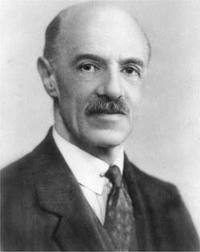
Core of human intelligence or g
 |
| Charles Edward Spearman |
 |
| Specific abilities and G factor |
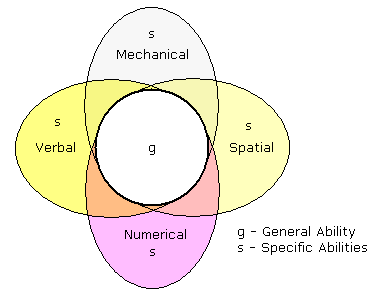
There are many different kinds of IQ tests using a wide variety of test
tasks. Some tests consist of a single type of task, others rely on a broad
collection of tasks with different contents including visual-spatial, verbal,
numerical tasks and asking for different cognitive processes such as reasoning,
memory, rapid decisions, visual comparisons, spatial imagery, reading, and
retrieval of general knowledge. The British
psychologist Charles Edward Spearman found that a single common factor
explained the positive correlations among different tasks of an intelligence
test. Spearman named it g or
"general intelligence factor". He interpreted it as the core of human
intelligence that, to a larger or smaller degree, influences success in all
cognitive tasks and thereby creates the positive manifold. This interpretation
of g as a common cause
of test performance is still dominant in intelligence tests.
Multiple
intelligences
The American developmental psychologist Howard Earl Gardner proposed the
theory of multiple intelligences based on studies not only of normal children
and adults but also of gifted individuals called savants and prodigies and of
persons who have suffered brain damage. This led Gardner to break intelligence
down into at least eight different components: logical, linguistic, spatial,
musical, kinesthetic pertaining to body-movements, interpersonal, naturalist
pertaining to environment, and existential.
 |
| Howard Earl Gardner |
1. Logical/Mathematical intelligence: This area has to do with logic, abstractions, reasoning and
numbers and critical thinking. While it is often assumed that those with this
intelligence naturally excel in mathematics, chess, computer programming and
other logical or numerical activities. Logical reasoning is closely linked to fluid intelligence and to general ability.
2. Spatial intelligence: This area deals with spatial
judgment and the ability to visualize with the mind's eye. Careers which suit
those with this type of intelligence include artists, designers and architects.
A spatial person is also good with puzzles.
3. Verbal/Linguistic
intelligence: This area has to do with words, spoken
or written. People with high verbal-linguistic intelligence display a facility
with words and languages. They are typically good at reading, writing, telling
stories and memorizing words along with dates. They tend to learn best by
reading, taking notes, listening to lectures, and by discussing and debating
about what they have learned. Those with verbal-linguistic intelligence learn
foreign languages very easily as they have high verbal memory and recall, and
an ability to understand and manipulate syntax and structure. Verbal ability is
one of the most g-loaded abilities.
4. Kinesthetic/Bodily intelligence: The core elements of the bodily-kinesthetic intelligence
are control of one's bodily motions and the capacity to handle objects
skillfully. Gardner elaborates to say that this intelligence also includes a
sense of timing, a clear sense of the goal of a physical action, along with the
ability to train responses so they become like reflexes. In theory, people who
have bodily-kinesthetic intelligence should learn better by involving muscular
movement. They are generally good at physical activities such as sports or
dance. They may enjoy acting or performing, and in general they are good at
building and making things.
5. Musical intelligence: This area has to do with sensitivity to sounds, rhythms, tones, and music. People
with a high musical intelligence normally have good pitch and are able to sing,
play musical instruments, and compose music. Since there is a strong auditory
component to this intelligence, those who are strongest in it may learn best
via lecture. Language skills are typically highly developed in those whose base
intelligence is musical. In addition, they will sometimes use songs or rhythms
to learn. They have sensitivity to rhythm, pitch, meter, tone, melody or
timbre.
6. a. Interpersonal intelligence: Interpersonal intelligence is the ability to understand
others. In theory, individuals who have high interpersonal intelligence are
characterized by their sensitivity to others' moods, feelings, temperaments and
motivations, and their ability to cooperate in order to work as part of a
group.
6. b. Intrapersonal intelligence: This area has to do with introspective and
self-reflective capacities. This refers to having a deep understanding of the
self; what your strengths/ weaknesses are, what makes you unique, being able to
predict your own reactions/emotions. Philosophical and critical thinking is
common with this intelligence. Many people with this intelligence are authors,
philosophers, and members of clergy.
7. Naturalistic intelligence: This area to do with nurturing and relating information to
one’s natural surroundings. They become naturalists, farmers and gardeners.
8. Existential intelligence: Some proponents of multiple intelligence theory proposed spiritual
or religious intelligence as a possible additional type. Gardner did not want
to commit to a spiritual intelligence, but suggested that an “existential” intelligence
may be a useful construct.
It seems that Gardner crystallized and categorized different facets of
human intelligence into distinct types of intelligence. In individual with high
general intelligence different abilities may develop in appropriate
circumstances if properly motivated, supported and persevered.
Subscribe to:
Posts (Atom)